
Where the Mountains Meet the Adriatic Sea
Explore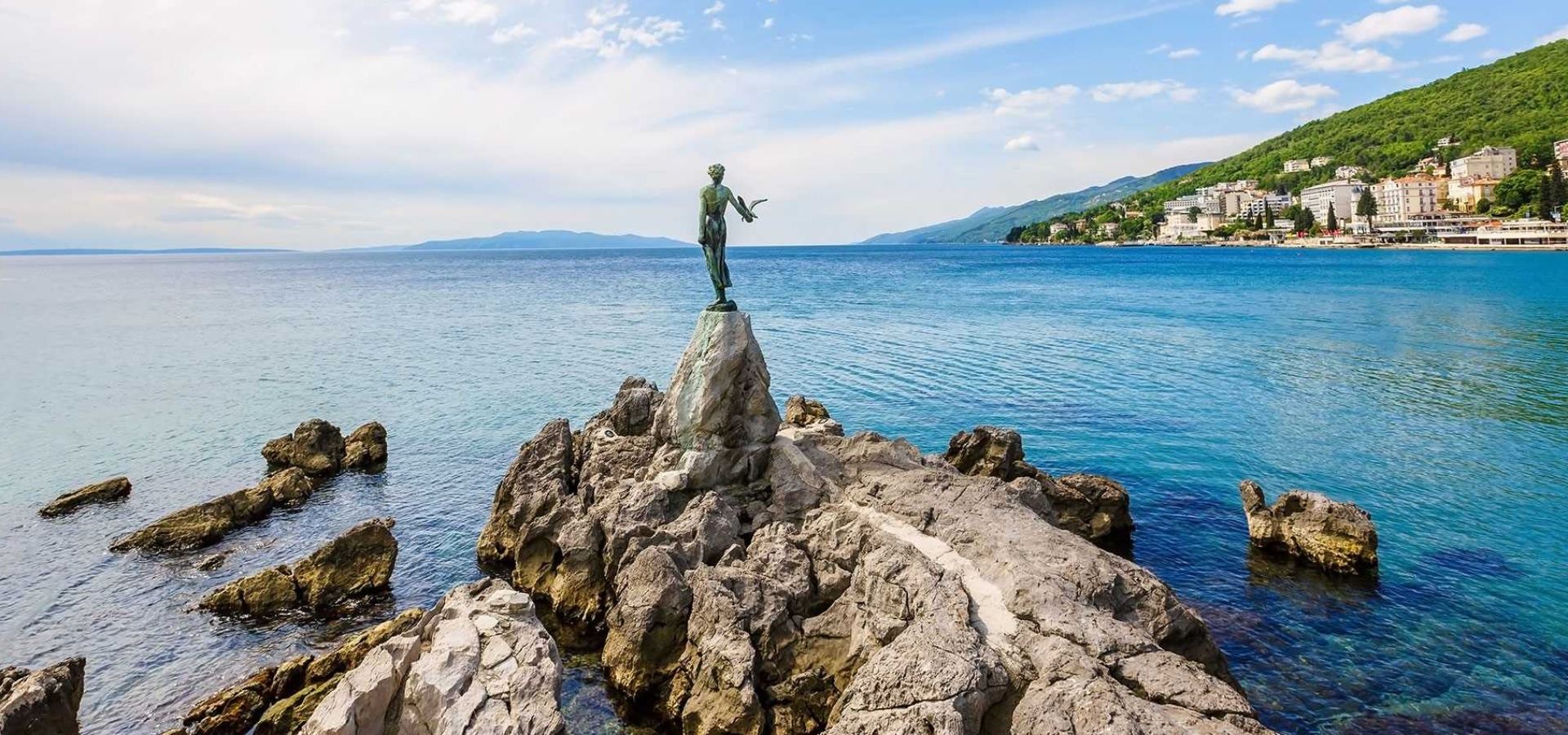

Happy Islands, Bottlenose Dolphins, and Butterfly Valleys.
The deep blue of the sea and the dark green of the forests, the land of dolphins, griffon vultures, and lynxes, an interlacing of islands and mountains – this is what makes Kvarner such a wondrous destination.
Balancing between the Adriatic Sea and Gorski Kotar, this region offers a unique blend of experiences. Spend your winters skiing on Platak with a view of the sea, and in the summers, set sail on the dreamy blue vastness of the Adriatic. Discover hidden beaches, explore the charming island towns, and embark on adrenaline-filled active holidays amidst the villas of the Kvarner Riviera. This region promises to be the canvas for countless new and memorable experiences.
Where the Mountains Meet the Adriatic Sea
ExploreNestled between the sea and the land, Gorski Kotar is the Croatian Narnia.
This kingdom of nature boasts a green wilderness, embraced by the magnificent rivers Dobra and Kupa and the lakes Lokvarsko and Čogrljevo. Explore inspiring landscapes shaped by canyons and caves, making for a truly enchanting experience. Risnjak National Park was named after the lynx (ris in Croatian) – the rarest of all European beasts – which chose these vast forests for its home. Whether you seek the warm autumn colours, the idyllic white landscapes of winter, or the refreshing summer greens, numerous walking and cycling paths await to guide you to crown jewels like Kamačnik, Zeleni Vir, Vražji Prolaz, and the Lokvarka Cave. Follow the walking path along the river Kupa from its spring in a charming turquoise lake, and you’ll discover the Butterfly Valley, a haven for almost 500 different species of these beautiful, fragile creatures. Kvarner is an ideal destination for modern explorers. Učka Nature Park, Grobnik Alps, and the cliffs of Bijele and Samarske Stijene are among those rare places in the world where you can still experience truly untouched nature.


Nestled in the Gorski Kotar region, Risnjak National Park, spanning 63.5 km², is a haven for large predators, where lush forests blend seamlessly with the awe-inspiring scenery of mountain ranges – Risnjak and Snježnik. Get ready for a journey where you’ll be enchanted by nature’s beauty, conquer snow-capped peaks, and uncover the source of the River Kupa – one of Croatia’s most stunning waterways.

Amongst the main attractions of Učka are the unique limestone formations in the area of Vrana and at the very top of Učka, where an old tower is erected. Učka Nature Park is located on the eastern coast of the Istrian peninsula and connects Istria with Kvarner Bay. This oasis of biodiversity was declared a nature park in 1999 and encompasses the eponymous mountain and the Ćićarija plateau, covering 160 square kilometres. It is only in the cracks in the rocks on Učka that you can find the Croatian bellflower, and if you are lucky, you will be able to enjoy the sight of the impressive Eurasian griffon vulture flying overhead, an endangered vulture that has been nesting again high on the cliffs of Učka.

Visiting this part of Croatia provides a fantastic opportunity to explore a unique cultural heritage – castles!
Embarking on the Routes of the Frankopans will lead you through a captivating history of intrigue and big battles, mysterious castles and the secret loves of the Frankopan noble family.
This attractive route will take you from Gorski Kotar to the island of Krk through the valley of Vinodol and includes 17 castles and 3 religious buildings that will make any history buff feel like they travelled back in time. For those who prefer fiction to reality, a visit to the cowboy village of Roswell, the setting for the movie Winnetou, might provide an enjoyable escape into cinematic adventure.

You can reach the Adriatic Sea on historical roads Lujzijana, Karolina, Jozefina, and Rudolfina, which pass through picturesque towns of the mountainous part of the region, such as Delnice, Fužine and Lokve, bringing you almost all the way to the sea.
The nearly 100 kilometres of indented coastline in Kvarner encompass three rivieras: the Opatija Riviera, the Crikvenica – Novi Vinodol Riviera, and the Rijeka Riviera. The grandeur of nature and the allure of coastal living create a kaleidoscope of colours and scents that characterise the essence of Kvarner. Crikvenica, once an essential part of ancient trade routes, has been building a reputation for the last century as a town that offers a remedy for both body and soul through the practice of thalassotherapy. Ljubavna Cestica (the Love Path) is perfect for romantic souls. This hiking trail, while requiring some effort, rewards you with breathtaking scenic views and ancient fortresses such as the Badanj Fort. According to local legend, a great snake guards a buried treasure in this intriguing location.

The hill of Trsat, with the ancient fortress Tarsatica, now houses the oldest Marian shrine in Croatia. It was here, where many cultures left their mark, that the first brushstrokes of Rijeka (Croatian: “river”) were created.
The City that Flows, as the locals call it, is the largest port on the Adriatic Sea, attracting people with its rich history and dynamic lifestyle. Korzo, Rijeka’s main street, serves as a vibrant centre of all events in the city. Here, you can witness history in the making every day as the pulse of the city beats through this bustling thoroughfare. Korzo transforms into the venue of the most colourful outdoor party during the Rijeka Carnival, where you can see the fruits of creative labours celebrating life and joy. The Rijeka Carnival, locally known as the fifth season, is the largest in Croatia. The best way to immerse yourself in this lively celebration is to join thousands of other costumed people, dancing to the resounding sounds produced by the traditional masked group known as Zvončari, or “bell ringers” in Croatian. Rijeka’s Old Town is like a giant historical almanack, where the stories of the past are etched into the stones of numerous facades, waiting to be read and explored. Rijeka is a treasure trove with landmarks like the Croatian National Theatre Ivan pl. Zajc, palaces from the age of the Austro-Hungarian Monarchy, factories, the Turkish House, Rijeka Tunnel, and a torpedo launch station. Some of these are even featured in the famous animated series about Professor Balthazar.

The towns surrounding Rijeka, including Bakar, Kastav, and Kraljevica, will charm you with their meditative nature and rich heritage.
Explore Bakar’s drystone walls, marvel at the magnificent terraces for cultivating grapes that extend to the sea, wander through the historic town of Kastav with its narrow cobblestone streets, and visit the castles of Kraljevica, once the residences of the noble families Zrinski and Frankopan.

And like a pearl nestled at the foot of the imposing mountain of Učka lies the town of Opatija.
A town worthy of hosting kings and emperors, providing a haven for literary geniuses and Nobel prize winners, and serving as a beautiful inspiration for Isadora Duncan and Giacomo Puccini, Opatija remains an elite tourist destination today.
Its Lungomare is not just a coastal promenade; it’s an homage to the magical blue vastness that unfolds beyond the splendid villas of Lovran, the warm smiles of the fishermen in Volosko, the elegant Villa Angiolina, the charming Camellia flowers, the resplendent American Gardens, and the symbol of Opatija – the Maiden with the Seagull, a graceful sculpture of a girl keeping vigil above the sea.
Opatija is a patchwork of magical memories, a herbarium of the most wonderful fragrances of the Mediterranean, and a stage set with the awe-inspiring islands of Kvarner.


The first in line of sight are Cres and Lošinj, united by a drawbridge but entirely differing in character.
Cres, the largest of the Croatian islands, mirrors the character of the griffon vulture that calls it home: mysterious, unattainable, and free. Lošinj, on the other hand, is as mild as a Mediterranean garden, with sea air renowned for its healing properties especially beneficial for respiratory diseases. The town of Cres will enchant you with its picturesque narrow houses and ancient history. Meanwhile, the village of Lubenice, perched on a cliff nearly 400 metres high, overlooks Sv. Ivan Beach, considered one of the most beautiful beaches on the Adriatic Sea. The beginning of Lošinj is marked by Osor, a town so steeped in the ancient history of Greek myths that it almost feels like an outdoor museum. The rich maritime heritage carries on in the towns of Mali Lošinj and Veli Lošinj. Today, the most famous inhabitants of Lošinj include the statue of the ancient athlete Apoxyomenos that you can visit at the Museum of Apoxyomenos in Mali Lošinj, and a pod of bottlenose dolphins, a protected species, that you can adopt to contribute to their protection.


The four towers belonging to the churches on Rab are reminiscent of a sailing ship, welcoming you to the tranquil port of another one of Kvarner’s pearls.
It was the Romans who named Rab the Happy Island. You will fall in love with the town as you stroll around its town walls, explore the patrician palaces Bakota, Dominis Nimira and Tudorini, and immerse yourself in the preserved town centre featuring the beautiful Cathedral of the Assumption of the Blessed Virgin Mary. Rab is also unique for its summer festival called “Rabska fjera”, the heavenly Paradise Beach (Rajska Plaža), and a local delicacy – the Rab cake – for which only a handful of women in Rab have the recipe.


To conclude the tour, the island of Krk is the cherry on top of the sundae that is Kvarner.
Krk boast numerous attractions, including the beautiful beaches of Baška, the green islet of Košljun near the town Punat, the Baška Tablet, an important historical artefact from the village of Jurandvor, the fine wine žlahtina, Klančić – one of the narrowest streets in the world that Vrbnik is known for, and the House of Krk’s pršut that you will find in the village of Vrh.
The picturesque villages of Dobrinj, Kornić, Soline, and Šilo are an authentic representation of the rich heritage that Krk offers. With over 500 kilometres of walking trails, you can explore places like the Biserujka cave, the Diviška stream, and Kuntrep, the oldest ornithological reserve in the world.
Cycling enthusiasts can take the “Path to the Moon”, which leads you to a landscape resembling a stone desert and provides magnificent scenic views of Velebit. The town of Krk, on the other hand, is perfect for summer nights. Explore the centre of the island and marvel at the grand Cathedral of the Assumption of the Blessed Virgin Mary, a sight that adds to the charm of your summer evenings.

Kvarner offers the most diverse pleasures to the curious gourmet. In this cluster are caught and prepared the Adriatic's best scampi, which have received every possible compliment, including one that says there are none better in the world!


